

- Undergraduate Program (B.A.)
Not a single
wasted term
Every student studies the same foundation of great books and ideas, then goes deep in subjects they choose, and spends all four years building something.
Bachelor of Arts in Liberal Studies
your four-year degree
One degree, three parts, running side by side from your first term to your last.
Intellectual Foundations
Part One - what everyone reads
The books, ideas, and arguments every student takes on together: Greece and Rome, the Bible, the rise of the West, the American founding, and the basics of economics, math, and science.
Concentrations
Part Two - what you choose
The subject you go deep in. Take one, take two, or take none — concentrations are optional. There are eight to choose from, philosophy through computer science and AI, and each runs about a dozen courses. Whatever you do not spend on a concentration is yours to design with your faculty advisor.
Polaris
Part Three - what you build
A project you choose in your first year and work on until you graduate — a company, invention, piece of research, or creative work that you publicly release.
- The Shape of It
What Four Years Looks Like
The three parts of the degree are not three stages. They overlap, which is why there is never a term spent waiting for the next thing to begin.
–
YEAR ONE
YEAR TWO
YEAR THREE
YEAR FOUR
Years one and two
Mostly the foundation, taken with everyone else in your class. You are reading the same books at the same time as your friends, which is why arguments here start at dinner and finish at midnight. You also pick your Polaris project and start working on it.
Years two through four
This is when you work through a concentration, if you take one — starting with the groundwork and ending in small advanced seminars. Some students take two. Some take none and build their own path instead. Around that, you fill out your schedule with courses you and your advisor pick — including ones well outside your concentration.
All four years
Polaris runs the whole way through. You build, test it on real people, rebuild, and finish by releasing the work publicly.
- The Core
Intellectual Foundations
Nineteen courses, taken by everyone. Sixteen are set for you. Three you pick from a short science and math list. (This is the part of the education we do not leave to chance.)
The humanities
EIGHT COURSES
Epic and Tragedy The Bible
Plato and Aristotle
The Scientific Revolution
Writing and the English Language
Ancient Greece Ancient Rome
Rise of the West
History, politics, and society
SIX COURSES
The Enlightenment
Making of the Modern World
The American Century
The American Founding
American Frontiers
Ideological Experiments of the 20th Century
Math, science and economics
FIVE COURSES
Applied Economics I Applied Economics II
Quantitative Reasoning: Analysis
Quantitative Reasoning: Data
Introduction to Physics
Life Sciences, Ethics, and Policy
Everyone takes Applied Economics I and II. Then you choose three from the dashed four.
WHEN YOU TAKE IT
Mostly in your first two years, at the same time as everyone else in your class. That is why the reading list further down this page is a shared one and not a personal one.
WHY EVERYONE TAKES IT
Conversation goes deep fast when the room already shares a canon: Plato, the Bible, the American Founders, the ideological experiments of the last century. You cannot argue well with people who share nothing in common.
WHAT IT LEAVES YOU WITH
The ability to write clear English without leaning on AI, read difficult books with care, argue honestly, reason with numbers and uncertainty, and understand how technology and markets work.
- GOING DEEP
Pick One, Two, or None
A concentration is a subject you master. Each one is about a dozen courses: the first half builds the groundwork, the second half is advanced work and small seminars where you take on real problems with faculty. You can take one, take two, or take none at all — the only limit is the credits available in the Liberal Studies major.
Everything else in your schedule is yours to choose with a faculty advisor, and nothing stops a mathematician from taking literature seminars or a philosopher from taking machine learning. Our faculty are organized into two groups, which we call the Center for Arts and the Center for Sciences, and every concentration lives in one of them.
Center For Arts
Philosophy
History
Literature
American Civilization
Center For Sciences
Mathematics
Computer Science and Artificial Intelligence
Economics
Applied Track
Business Innovation
Law
Journalism
Philosophy
Center For Arts
The permanent questions, read in the original arguments: what is good, what can be known, what is human nature.
A chronological walk through the tradition, then seminars on single thinkers and single questions.
You Start With
Hellenistic and Roman Philosophy, Medieval Philosophy, Early Modern Philosophy, German Idealism, and Twentieth-Century Philosophy — plus one of Milton, Tocqueville’s Democracy in America, or American Philosophy: From Puritans to Pragmatists.
Then you choose six from courses such as
History
Center For Arts
What happened, and how anyone can claim to know. Evidence, cause, and the long arc of civilizations.
Surveys from antiquity to the present, then eighteen credits of advanced work wherever your interest lands.
You Start With
Renaissance and Reformation, Romanticism and Realism, and Decadence, Modernism, and the Great War — plus three from Medieval Literature, Milton, American History I: Eighteenth and Nineteenth Century, or Tocqueville.
Then you choose six from courses such as
Literature
Center For Arts
Close reading of the works that shaped the language and the imagination, and the craft of writing well about them.
A historical sequence first, then periods, authors, genres — and the practice of writing yourself.
You Start With
Medieval Literature, Shakespeare, Milton, Eighteenth-Century Literature, and Literary Criticism — plus one from American Literature I: Eighteenth and Nineteenth Century, Renaissance and Reformation, Romanticism and Realism, or Decadence, Modernism and the Great War.
Then you choose six from courses such as
American Civilization
Center For Arts
The American experiment in its fullness and complexity: its founding, its institutions, its ideals, its literature, its contradictions.
Broad interdisciplinary surveys, then seminars on the thinkers, statesmen, and works that made the country.
You Start With
American History I: Colonial Period to Civil War, American Literature I: Eighteenth and Nineteenth Century, American Politics I: Ideas and Institutions, Tocqueville’s Democracy in America, and American Philosophy: From Puritans to Pragmatists — plus one from Eighteenth-Century Literature, Romanticism and Realism, or Decadence, Modernism and the Great War.
Then you choose six from courses such as
Mathematics
Center for Sciences
Proof, structure, and modeling — the training that makes every quantitative field afterward make sense.
Proof and computation side by side, then eighteen credits you shape toward pure, applied, or statistical work.
You Start With
Mathematical Reasoning and Proof, Linear Algebra, Probability, Applied Data Science I and II, Applied Mathematical Methods, and Differential Equations. Single-Variable Calculus comes first as a prerequisite.
Then you choose six from courses such as
Computer Science and Artificial Intelligence
Center for Sciences
Leveraging our applied engineering lab, programming, data structures, and machine learning, taken far enough that you can build systems that work.
Fundamentals first, then you pick a lane: systems, or machine learning.
You Start With
Linear Algebra, Probability, Applied Data Science I, Data Structures, Databases, and AI-Enabled Software Engineering with its lab. Calculus, Applied Mathematical Methods, and Introduction to Programming come first as prerequisites.
Then
Everyone takes Programming Languages and Software Design and Introduction to Machine Learning. Then four courses from one track — systems (Computer Architecture and OS, Computer Networks, CyberSecurity, Computer Graphics and Physical Simulation, Advanced Algorithms, Compilers, Automata and Computing Theory) or machine learning (Math of AI, Machine Learning Engineering, Transformers and Diffusion Models, Reinforcement Learning, Physical AI and Computer Vision, Advanced Topics in Machine Learning).
Economics
Center for Sciences
How incentives, prices, and institutions shape what people do — theory paired with data and real empirical work.
The full theory sequence and the quantitative tools, then policy, finance, and markets.
You Start With
Microeconomic Theory I and II, Macroeconomic Theory I and II, Probability, Applied Data Science I, and Mathematical Economics. Calculus, Applied Mathematical Methods, and the two Applied Economics courses come first as prerequisites.
Then you choose six from courses such as
Business Innovation
Applied track
The startup lifecycle, taught by people who have run it: venture strategy, AI technology, financial modeling, venture law, and leadership. Same size as any other concentration, but organized around building a company rather than around one discipline.
The startup lifecycle in order, from first strategy through the exit.
You Start With
Entrepreneurial Strategy, Business Foundations for Builders, Leading with Principles, Technology and AI for Builders, Law for Builders, and Building and Product Design.
Then you choose six from courses such as
Law
Applied track
Info coming soon
Journalism
Applied track
Info coming soon
- NORTH STAR
Polaris
Polaris is the part of the UATX degree devoted to ambitious, self-directed work. Instead of spending this time in conventional classes, students receive academic credit for pursuing something of their own: building, testing, and iterating over time. Polaris is a real thing you make: it runs all four years, and it counts toward your degree like any other coursework. Every UATX graduate leaves with proof of what they can do.
Find the problem
You find a problem worth years of your attention and shape a project around it, with a mentor helping you aim.
Build
You start building early and keep refining with feedback from real users and advisors. An internship or an apprenticeship can count toward this if it genuinely moves the project forward.
Release
You put the work into the world — a startup, invention, a research contribution, or a creative production.
- COMMON QUESTIONS
Straight Answers
Do I have to choose a concentration before I apply?
No. You apply to UATX, not to a department. Your first two years are largely the shared foundation, and you may settle on a concentration as you go — or take two, or take none.
What degree do I graduate with?
A Bachelor of Arts in Liberal Studies.
Can I take courses outside my concentration?
Yes, and most students do. A good chunk of your schedule is elective, and you are encouraged to spend it across the aisle.
How many courses will I take at once?
Usually five. We run three 10-week terms a year instead of two semesters.
Does an internship count?
It can count toward Polaris, if it genuinely advances your project and gets approved. Bootcamps and specialized skills courses can too.
Is Polaris the same thing as a senior thesis?
No. It starts in your first year rather than your last, it does not have to be a piece of writing, and it ends with you releasing the work publicly.
Can I do two concentrations?
Yes, as long as the credits fit inside the ninety-six-credit major. Two concentrations is thirty-six credits each, so it is a real commitment — plan it with your faculty advisor early. You are also free to take none and design your own path.
What if I want to do two things at once?
That is normal here. Talk to your faculty advisor early — the elective space in the degree is generous, and advisors plan around it.
- For the Detail-Minded
The Nitty-Gritty
Everything above in the language of a course catalog, for anyone who wants the exact requirements. The degree is a Bachelor of Arts in Liberal Studies: 180 credit hours, designed for four years and required to be finished within five unless an extension is granted by the Provost.
How Credits Work
Most courses here are worth 3 quarter credits. We run three terms a year rather than two semesters, and a normal load is 15 quarter credits a term (about five courses) which comes to 45 quarter credits a year and 180 over four years.
Requirement
Credits
What it Covers
Intellectual Foundations
57
Humanities and fine arts (24) · social and behavioral sciences (18) · natural sciences, mathematics, and technology (15)
Liberal Studies major
96
Polaris
27
Polaris Launch · Polaris Build · Polaris Gateway · Electives, and independent studies
Total
180
B.A. in Liberal Studies
Inside the major (96 credits)
A concentration or applied track is 36 credits: 18 lower-division and 18 upper-division. Students may complete zero, one, or two concentrations, provided the total fits within the 96 credits of the major. Course numbers indicate level — 100 and 200 are earlier, 300 and 400 are advanced. Across the full 96 credits you need at least 18 credits at the 200 level and at least 45 credits at the 300 or 400 level. The remaining credits are electives selected in consultation with your faculty advisor.
Inside Polaris (27 credits)
POLR 110 Polaris Launch opens the sequence and POLR 490 Polaris Gateway closes it. At least 21 credits come from POLR 310/311 Polaris Build. Up to 6 of those build credits may be satisfied through approved equivalents — specialized skills courses, bootcamps, internships, or apprenticeships — subject to approval by the Executive Director of the Innovation Labs.
For the full requirements, term by term, see the Academic Catalog.
- What makes the Difference
Four years, no filler
Shared Intellectual Core
Everyone reads the same foundational books. Conversations go deep, fast. You already share a common basis in subjects like Plato, Tocqueville, the American Founders, and the ideological experiments of the 20th century.
By Graduation, You Will Have
The ability to think, write, and read deeply — plus broad technical expertise; real depth in the subject or subjects you chose; and a project you’ve shipped into the world.
High Standards, Clearly Measured · Integrated Disciplines · Designed For Builders
- On the syllabus
Some of the Texts Our Students Are Reading in Class
A Patriot’s History of the United States: From Columbus’s Great Discovery to America’s Age of Entitlement, Larry Schweikart and Michael Allen
The Bubble Act, edited by Helen Paul, et al.
The Legal Tender of Paper Money in America, Benjamin Franklin
Electrical Engineering: Principles and Applications, 6th ed, Allan R. Hambley
The Case Against Education: Why the Education System Is a Waste of Time and Money, Bryan Caplan
Selfish Reasons to Have More Kids: Why Being a Great Parent Is Less Work and More Fun Than You Think, Bryan Caplan
Open Borders: The Science and Ethics of Immigration, Bryan Caplan
Build, Baby, Build: The Science and Ethics of Housing Regulation, Bryan Caplan
Learn to Read Greek: Part 2, Andrew Keller and Stephanie Russell
Mosaic Calculus, Danny Kaplan
The Golden Ass, Apuleius
Confessions, Augustine
The New Oxford Annotated Bible: New Revised Standard Version with the Apocrypha
Dialogue with Trypho, Justin Martyr
On First Principles, Origen
Against Celsus, Origen
Life of Constantine, Eusebius
Perpetua et Felicitas, Tertullian
Against Heresies, Irenaeus
Orations, Athanasius
Life of Anthony, Athanasius
Oration, Gregory of Nazianzus
The Anathematisms of the Emperor Justinian Against Origen, Justinian
Forty Hadith, Al-Nawawī
Ancient Arabian Poetry, Lyall
Hermeneutics: A Very Short Introduction, Jens Zimmermann
The Invisible God, Paul Corby Finney
Byzantine Theology: Historical Trends and Doctrinal Themes, John Meyendorff
Islamic History, Adam Silverstein
A Random Walk Down Wall Street: The Best Investment Guide That Money Can Buy, 13th ed., Burton G. Malkiel
History of the Kings of Britain, Geoffrey of Monmouth
Ecclesiastical History of England, The Venerable Bede
Lais of Marie de France, Marie de France
The Love Letters of Abelard and Heloise, Peter Abelard and Heloise
Proslogion, St. Anselm
Life of St Francis, St. Bonaventure
Vita Nuova, Dante Alighieri
Beowulf, Seamus Heaney
Summa Theologica, Thomas Aquinas
The Song of Roland and Other Poems of Charlemagne, Simon Gaunt and Karen Pratt
A Concise History of the Crusades, Thomas Madden
The Autumn of the Middle Ages, Johan Huizinga
Paradiso, Dante
The Prince, Niccolò Machiavelli
Discourses on Livy, Niccolò Machiavelli
Considerations on the Causes of the Greatness of the Romans and Their Decline, Charles Baron de Montesquieu
The Spirit of the Laws, Charles Baron de Montesquieu
Thoughts on Machiavelli, Leo Strauss
Virtue Politics, James Hankins
Modern Principles of Economics, Tyler Cowen and Alex Tabarrok
Conceptual Physics, Paul Hewitt
Communism: A History, Richard Pipes
The Great Lie, Flagg Taylor
Brave New World, Aldous Huxley
The Cowshed: Memories of the Chinese Cultural Revolution, Ji Xianlin
The Nazi Seizure of Power, William Sheridan Allen
A World Beyond Politics, Pierre Manent
The Passing of an Illusion: The Idea of Communism in the Twentieth Century, François Furet
Russia Under Western Eyes: From the Bronze Horseman to the Lenin Mausoleum, Martin Malia
The Gulag Archipelago, Aleksandr Solzhenitsyn
Sixteen Points, Mao Zedong
Doctrine of Fascism, Benito Mussolini
The Nazi Party Platform
Speech (April 12, 1922), Adolf Hitler
Interview with Hitler (1923)
The Nuremberg Trials
Utopianism, Ancient and Modern, Irving Kristol
Introduction to the Cultural Revolution, Jonathan Spence
Ideology and Terror: A Novel Form of Government, Hannah Arendt
German Nihilism, Leo Strauss
An Inquiry into the Nature and Causes of the Wealth of Nations, Adam Smith
On the Principles of Political Economy and Taxation, David Ricardo
Principles of Political Economy, John Stuart Mill
Utilitarianism, John Stuart Mill
Principles of Economics, Carl Menger
Investigations into the Method of the Social Sciences with Special Reference to Economics, Carl Menger
State and Revolution, Vladimir Lenin
The End of Laissez-Faire, John Maynard Keynes
Socialism: Utopian and Scientific, Friedrich Engels
Theory of Moral Sentiments, Adam Smith
Manifesto of the Communist Party, Karl Marx and Friedrich Engels
Of Property, John Locke
The Grumbling Hive: Or Knaves Turned Honest, Bernard Mandeville
The Progress of English Liberty, David Hume
An Essay on the Principle of Population, Thomas Robert Malthus
Economic Calculation in the Socialist Commonwealth, Ludwig von Mises
Economics and Knowledge, F. A. Hayek
The Use of Knowledge in Society, F. A. Hayek
The Pretence of Knowledge, F. A. Hayek
A Conflict of Visions, Thomas Sowell
The Clash of Economic Ideas, Lawrence White
The Enduring Debate, David Canon and John Coleman
Who Are We?, Samuel Huntington
Democracy in America, Alexis de Tocqueville
The Spirit of the Laws, Charles Baron de Montesquieu
A Citizen’s Guide to American Ideology, Morgan Marietta
The Federalist Papers, Alexander Hamilton, et al.
U.S. Constitution and the Bill of Rights
Declaration of Independence
Common Sense, Thomas Paine
The Study of Administration, Woodrow Wilson
The Political Parties Have Sorted, Morris P. Fiorina
Polarization and the Political Elite, Todd Washburn
The History and Danger of Administrative Law, Philip Hamburger
Now…This, Neil Postman
The Myth of the Rational Voter: Why Democracies Choose Bad Policies, Bryan Caplan
The Irony of Democracy, Thomas Dye and Harmon Zeigler
Political Science and Journalism: Some Thoughts, Marc Ambinder
Americans’ Dismal Views of the Nation’s Politics, Pew Research Center
The War of the World: Twentieth-Century Conflict and the Descent of the West, Niall Ferguson
The Cold War: A New History, John Lewis Gaddis
Balance: The Economics of Great Powers, Glenn Hubbard
Night, Elie Wiesel
The Sinews of Peace, Winston Churchill
We Shall Fight on the Beaches, Winston Churchill
First Inaugural Address, Franklin D. Roosevelt
Radio Address to the Nation on Unemployment Relief, Herbert Hoover
Soviet Constitution, December 5, 1936
Jewel Voice radio broadcast, Emperor Hirohito
Address to Congress, Woodrow Wilson
Extract from Speech, Adolf Hitler
Five-Year Plan, March 18, 1946
Kellogg-Briand Pact
Suicide in the Trenches, Siegfried Sassoon
For the Fallen, Laurence Binyon
Germany’s war aims (September 1914)
Telegrams, Kaiser Wilhelm-Czar Nicholas
Why Do Some Nations Prosper? The Case of North and South Korea, Lucien Ellington and Tawni Hunt Ferrarini
On the Possibility of Progress, Paul M. Romer
Institutions, Technology and Prosperity, Daron Acemoglu
Nicomachean Ethics, Aristotle
Politics, Aristotle
The New Oxford Annotated Bible: New Revised Standard Version with the Apocrypha
Complete Works, Plato
How to Read the Bible: A Guide to Scripture, Then and Now, James Kugel
Linear Algebra Done Right, Sheldon Axler
Linear Algebra Done Wrong, Sergei Treil
The Hitchhiker’s Guide to Python, Kenneth Reitz and Tanya Schlusser
Moby-Dick, Herman Melville
Meditations on First Philosophy: With Selections from the Objections and Replies, René Descartes
Ethics: Proved in Geometrical Order, Baruch Spinoza
An Essay Concerning Human Understanding, John Locke
A Treatise of Human Nature, David Hume
An Enquiry Concerning Human Understanding, David Hume
Prolegomena to Any Future Metaphysics That Will Be Able to Come Forward as Science: With Selections from the Critique of Pure Reason, Immanuel Kant and Gary Carl Hatfield
Leibniz’s Monadology, Gottfried Wilhelm Leibniz
The World as Will and Representation, Arthur Schopenhauer
Foundations of the Entire Science of Knowledge, Johann Gottlieb Fichte
Phenomenology of Spirit, G. W. F. Hegel
Encyclopaedia Logic, G. W. F. Hegel
Philosophical Investigations into the Essence of Human Freedom, F. W. J. Schelling
System of Ethics according to the Principles of the Wissenschaftslehre, Johann Gottlieb Fichte
Six Theosophic Points, Jakob Böhme
The Abyss of Freedom, Slavoj Žižek
What is Enlightenment?, Immanuel Kant
A Short History of Modern Philosophy: From Descartes to Wittgenstein, Roger Scruton
A History of Philosophy, Frederick Copleston
German Idealism: The Struggle against Subjectivism, Frederick Beiser
Thinking through the Wissenschaftslehre, Daniel Breazeale
Fichte’s Ethical Thought, Allen Wood
Idealism as Modernism, Robert Pippin
Descartes: An Intellectual Biography, Stephen Gaukroger
The Flight to Objectivity: Essays on Cartesianism and Culture, Susan Bordo
Locke, Berkeley, Hume: Central Themes, Jonathan Bennett
The Dark Ground of Spirit: Schelling and the Unconscious, Sean J. McGrath
Schelling and Modern European Philosophy, Andrew Bowie
Schelling’s Organic Form of Philosophy: Life as the Schema of Freedom, Bruce Matthews
The Western Esoteric Tradition, Nicolas Goodrick-Clarke
The Complete Essays, Michel de Montaigne
The Major Political Writings of Jean-Jacques Rousseau, Jean-Jacques Rousseau
The Reveries of the Solitary Walker, Jean-Jacques Rousseau
Discourse on Inequality, Jean-Jacques Rousseau
Fundamentals of Physics, David Halliday, Robert Resnick, and Jearl Walker
Northanger Abbey, Jane Austen
Sense and Sensibility, Jane Austen
Pride and Prejudice, Jane Austen
The Best and the Brightest, David Halberstam
The Price of Power: Kissinger in the Nixon White House, Seymour Hersh
Pentagon Papers
Never Forget National Humiliation, Zheng Wang
Captives and Companions, Justin Marozzi
Empire of Cotton, Sven Beckert
Deep Roots: How Slavery Still Shapes Southern Politics, Avidit Acharya et al.
The Black Family in Slavery and Freedom, Herbert Gutman
The New Jim Crow: Mass Incarceration in the Age of Colorblindness, Michelle Alexander
Locked In: The True Causes of Mass Incarceration – and How to Achieve Real Reform, John Pfaff
The Real History of Slavery, Thomas Sowell
The Half Has Never Been Told: Slavery and the Making of American Capitalism, Edward Baptist
Slavery and the Wealth of Nations, Adam Smith
Capitalism: The Unknown Ideal, Ayn Rand
How the World Became Rich: The Historical Origins of Economic Growth, Mark Koyama and Jared Rubin
A Philosophical Enquiry into the Origin of our Ideas of the Sublime and the Beautiful, Edmund Burke
Critique of the Power of Judgment, Immanuel Kant
Of the Standard of Taste, David Hume
Haikus, Basho
Beauty, Roger Scruton
The Sublime and the Avant Garde, Jean-François Lyotard
U.S. Defense Policy toward Israel: A Cold War History, Daniel Samet
Stories of Your Life and Others, Ted Chiang
The Technological Society, Jacques Ellul
The Question Concerning Technology and Other Essays, Martin Heidegger
The Pentagon’s Brain: An Uncensored History of DARPA, America’s Top-Secret Military Research Agency, Annie Jacobsen
Against the Machine: On the Unmaking of Humanity, Paul Kingsnorth
The Abolition of Man, C.S. Lewis
Man Against Mass Society, Gabriel Marcel
The Human Condition, Hannah Arendt
Transhumanist Reader, Nick Bostrom
Irresistible: The Rise of Addictive Technology and the Business of Keeping Us Hooked, Adam Alter
Transhumanist Declaration, edited by Max More, Natasha Vita-More
The Techno-Optimist Manifesto, Marc Andreessen
Transhumanism and Posthumanism(s) on Education, Allen Porter
Transhumanism, Francis Fukuyama
Transhumanism, Julian Huxley
Transhumanist FAQ, Nick Bostrom
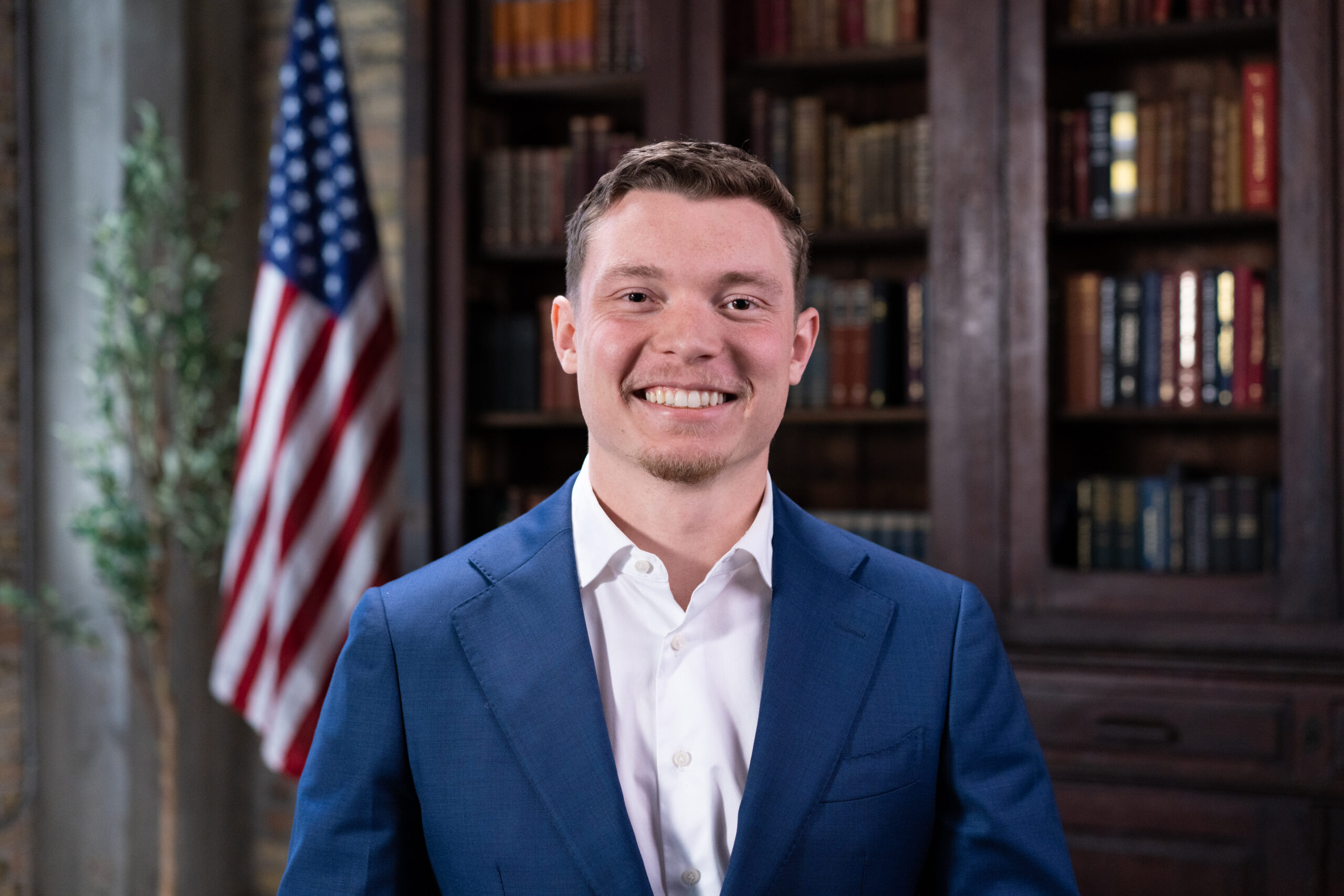
"I chose UATX because of its promise to grow the soul through liberal education. I stayed because it delivered."

"I chose UATX because I wanted to do something different. I have three older brothers who went to college before me. All of them are smart and capable and seemed to waste a lot of time and money at elite colleges, wandering their way toward graduation without much to say at the end of it, and I wanted to pursue something more real than that."

"I chose UATX for the community it offers: curious, diligent students in small, personal classes with world class professors."
Apply to UATX
The future of our institutions will be shaped by the students educated today. UATX exists to form leaders prepared to meet that responsibility.